


Detailed Explanation of the Internal Structure Diagram of an Environmentally Friendly Blasting Room
Contact Info
- Add:Former Chengcheng, Daixi Subdistrict Office, Zouping County, Zip:
- Contact: 杨经理
- Tel:13505432698
- Email:3095333932@qq.com
Other Products


Detailed Diagram of the Internal Structure of an Eco-Friendly Blast Room 135 Bright 0543 Light 2698
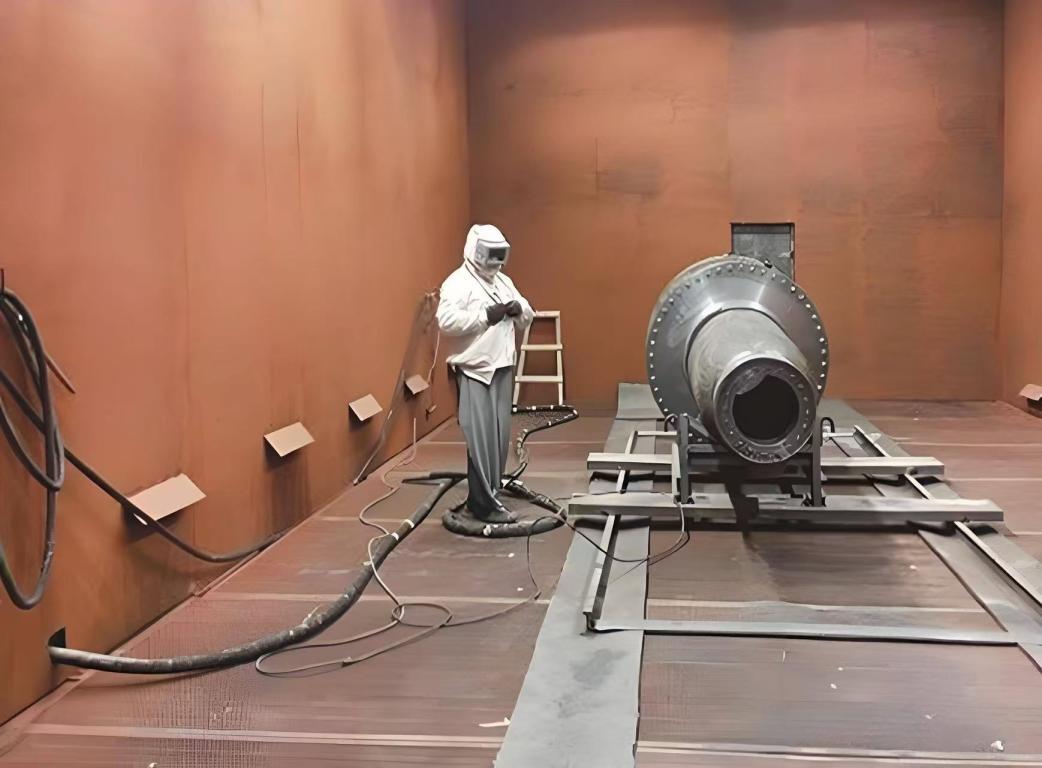
In industrial production, blast rooms serve as critical equipment for cleaning, derusting, and strengthening workpiece surfaces. They are widely used across various sectors, including machinery manufacturing, shipbuilding, automotive, and aerospace. The rationality of their internal structure and the effectiveness of their dust removal systems directly impact the quality and efficiency of blasting operations, as well as the safety and environmental sustainability of the working environment.
I. Detailed Explanation of the Internal Structure of a Blast Room
(I) Enclosure Structure
1. Main Frame: The main frame of a blast room is typically constructed from steel structures, such as welded sections. Common profiles include I-beams, channel steel, and square tubes, which offer high strength and stability to withstand the impact and vibrations during blasting. For instance, in large blast rooms, larger I-beams are used as primary load-bearing beams to ensure durability and robustness.
2. Walls and Roof: Walls and roofs are generally made from color steel plates or stainless steel plates. Color steel plates are lightweight, easy to install, and cost-effective, often filled with insulating and soundproofing materials like rock wool or foam to enhance thermal and acoustic insulation while strengthening the structure. Stainless steel plates offer better corrosion and wear resistance, making them suitable for blasting operations in demanding environments. Seams between walls and roofs should be sealed with sealant or sealing strips to prevent dust leakage.
3. Doors and Observation Windows: Blast room doors are usually positioned for easy workpiece access, with common types including swing doors, roller shutters, and sliding doors. Door dimensions should accommodate the largest workpieces to ensure smooth entry and exit. Door sealing is crucial and can be achieved using rubber seals or brush strips. Observation windows, installed on doors or walls, allow operators to monitor blasting operations. These windows should be made of high-strength, impact-resistant glass and equipped with protective grilles to prevent breakage during blasting.
(II) Blasting Work Area
1. Blast Gun System: The blast gun is the core tool of blasting operations, with its performance directly affecting blasting results. It consists of a gun body, nozzle, air valve, and abrasive valve. The gun body is typically made of aluminum alloy or stainless steel for lightness and corrosion resistance. The nozzle, a critical component, is often made from materials like boron carbide or ceramic, known for high hardness and wear resistance, ensuring longevity during prolonged use. Air and abrasive valves regulate the flow of compressed air and abrasive media, allowing adjustment of blasting intensity and speed.
2. Workpiece Support and Rotation Devices: To enable comprehensive blasting coverage, blast rooms are equipped with support and rotation devices. Small workpieces may be placed on fixed worktables, while larger ones require movable carts or cranes. Rotation devices, such as motor-driven turntables or roller-type rotators, allow workpieces to rotate during blasting, ensuring uniform treatment across all surfaces.
(III) Abrasive Recovery and Recycling System
1. Abrasive Collection Devices: During blasting, abrasive media scatter and must be collected promptly. Common collection methods include honeycomb floors, grating floors, and scraper conveyors. Honeycomb floors feature small hoppers that channel abrasive through bottom pipes to the recovery system. Grating floors allow abrasive to fall through grids into collection troughs below. Scraper conveyors use blades to push abrasive onto belts for transport to the recovery system.
2. Abrasive Elevators: Collected abrasive is elevated to a certain height for separation and recycling. Common elevators include bucket elevators and screw conveyors. Bucket elevators use buckets to lift abrasive efficiently and in large quantities, while screw conveyors employ helical blades to move abrasive along an axis, offering compact design and small footprint.
3. Abrasive Separators: Abrasive media accumulate impurities and broken particles during use and require separation. Common separators include gravity separators, cyclone separators, and magnetic separators. Gravity separators exploit weight differences to remove impurities, cyclone separators use centrifugal force for fine impurities, and magnetic separators extract iron-containing debris via magnetic fields. Cleaned abrasive is then recycled back into the blasting system.
(IV) Ventilation and Lighting Systems
1. Ventilation System: The ventilation system supplies fresh air and exhausts dust and fumes generated during blasting. It comprises air inlets, outlets, ducts, and fans. Inlets, located on the top or sides of the room, use louvers or filters to prevent external contaminants from entering. Outlets connect to dust removal systems to expel dusty air. Ducts are typically made of galvanized steel for corrosion resistance and airtightness. Fan selection depends on room volume and ventilation requirements to ensure adequate airflow.
2. Lighting System: The lighting system provides optimal illumination for blasting operations, enabling clear visibility of workpieces and processes. Explosion-proof lighting fixtures are essential to prevent ignition from sparks. Fixtures should be evenly distributed to avoid shadows and meet protection standards to shield against dust and moisture, ensuring longevity and safety.
| Industry Category | Others |
|---|---|
| Product Category | |
| Brand: | 定制 |
| Spec: | 定制 |
| Stock: | 1 |
| Manufacturer: | 山东亮光涂装科技有限公司 |
| Origin: | 113716 |


